How to Choose the Right San Antonio Remodeler
Updated: Aug 20
A kitchen that no longer works for family gatherings, a bathroom with dated finishes, or a home with rooms that feel disconnected can make remodeling feel urgent. Yet choosing a San Antonio remodeler should not be rushed. The contractor you select will influence not only the finished space, but also the clarity of the budget, the condition of your home during construction, and how confidently you can make decisions along the way.
For a high-investment renovation, homeowners need more than an attractive portfolio. They need an experienced, accountable team that can listen carefully, explain the work clearly, and manage the details that turn a plan into a durable finished home.
Start With Your Home and Your Priorities
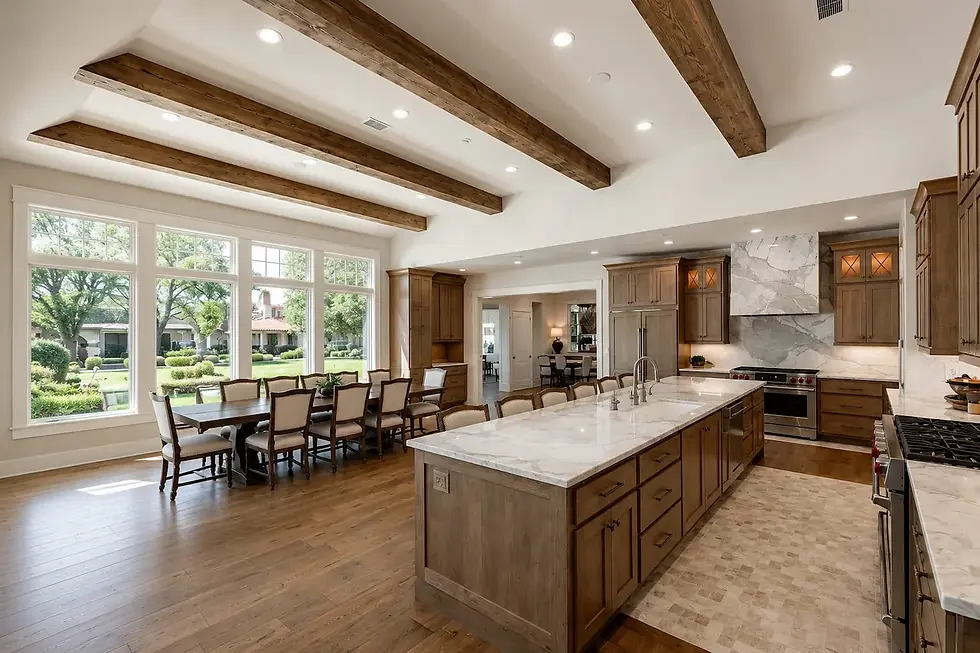
Before comparing contractors, define what needs to change and why. A kitchen renovation may be about creating better traffic flow, adding storage, improving lighting, or making room for several people to cook at once. A bathroom remodel may focus on a safer shower, more practical cabinetry, or finishes that feel appropriate for the rest of the home. Whole-home projects often require a broader view, including how each room connects in both style and function.
It helps to separate must-haves from preferences. For example, relocating plumbing may be worthwhile if it creates a more functional primary bath, but it has a different budget and construction impact than replacing finishes in the existing layout. The same is true of custom cabinetry, structural changes, and outdoor additions. A qualified remodeler can explain these trade-offs rather than treating every request as a simple line item.
Bring inspiration photos, measurements if you have them, and a realistic sense of your investment range to an in-home consultation. Good planning starts with an honest conversation about the home, the scope, and the result you want to live with for years.
Look Beyond the Estimate
Price matters, but an unusually low estimate is not always a better value. In remodeling, the initial number may leave out essential details such as permit coordination, demolition protection, material allowances, cabinetry installation, electrical upgrades, finish work, or cleanup. Those gaps can become costly changes later.
Ask each contractor how the proposal was developed. Did they visit the home and inspect the spaces involved? Did they discuss the condition of the existing structure, utilities, and access? Is the scope specific about what is included, what materials or allowances are anticipated, and where potential unknowns may exist?
A detailed proposal gives you something practical to evaluate. It also creates clearer expectations before construction begins. You should understand the work being performed, the payment structure, the preliminary schedule, and the process for handling changes requested by you or required by conditions discovered behind walls.
The best choice is not automatically the highest bid either. Premium materials and skilled labor should be reflected in the investment, but the proposal should still make sense for the scope. Look for thoroughness, transparency, and a contractor willing to answer direct questions without pressure.
Verify the Fundamentals of a San Antonio Remodeler
A polished website and strong photos are useful, but homeowners should also confirm the business practices behind the presentation. Ask whether the contractor is licensed and insured, and whether the appropriate work will be permitted. Permits are not simply paperwork. They help ensure that major structural, electrical, plumbing, and mechanical work is completed with required oversight.
For projects in communities such as Alamo Heights, Terrell Hills, Stone Oak, Shavano Park, Boerne, Fair Oaks Ranch, and The Dominion, local familiarity can be especially valuable. Homes vary widely in age, construction methods, neighborhood requirements, and renovation constraints. A contractor who understands the local process can anticipate questions earlier and coordinate the work more effectively.
Also ask who will be responsible for the project once construction starts. Some companies sell the job and hand it off with limited oversight. Others keep an owner or senior leader directly involved in planning and communication. Neither model is automatically wrong, but you deserve a clear answer about accountability.
Trust markers such as BBB accreditation, insurance, established experience, and a written craftsmanship warranty can offer additional reassurance. More importantly, ask how those commitments show up in the daily operation of the project.
Pay Attention to Communication Before Work Begins
The consultation stage is often a preview of the remodeling experience. Does the contractor arrive prepared? Do they ask about how your family uses the space? Are they willing to discuss practical concerns, including pets, work-from-home schedules, access to the home, dust control, and storage during construction?
Clear communication is particularly important when selections are still being made. Tile, countertops, fixtures, cabinet details, paint, hardware, and lighting affect both the design and the schedule. A coordinated remodeling team helps homeowners make decisions in the right order so that one delayed selection does not unnecessarily affect the next phase of work.
Ask how often you will receive updates and who your point of contact will be. You should know how questions will be handled, when you can expect schedule information, and how changes will be documented. Remodeling involves moving parts, especially in older homes, but surprises are easier to manage when communication is organized and direct.
Understand the Construction Process
A professional residential remodel should follow a defined process rather than a series of disconnected tasks. While every home is different, a thoughtful project usually includes six connected stages:
1. An in-home walkthrough to understand the existing conditions, goals, and budget.
2. Scope development and a detailed proposal that outlines the work being considered.
3. Planning, design coordination, material selections, and permit preparation when required.
4. Scheduling, site preparation, and protection of the home before demolition begins.
5. Organized construction with coordination among the trades, inspections, and regular communication.
6. A final quality walkthrough to address remaining details and review the completed work.
This process is not about making remodeling feel overly formal. It is about reducing avoidable confusion. When the sequence is clear, homeowners can make informed decisions early, materials can be ordered with better timing, and the project team can focus on workmanship rather than constant course correction.
Ask how the jobsite will be managed each day. For an occupied home, clean work areas, protected floors, controlled debris, and respectful crews matter. A renovation will create some disruption, particularly during kitchen, bathroom, or whole-home construction. The goal is not to promise a disruption-free project. It is to manage the disruption with care and keep you informed about what is happening next.
Evaluate Quality Where It Counts
Finish selections naturally get attention, but quality begins behind the finished surfaces. Proper framing, waterproofing, plumbing connections, electrical work, ventilation, cabinet installation, and substrate preparation all affect how a remodeled space performs over time.
Ask to see examples of work similar to your project. A contractor with experience in custom kitchens may be well suited to a cabinetry-focused renovation, while a whole-home transformation calls for broader coordination across multiple rooms and systems. For outdoor living spaces and decks, material durability, drainage, structural connections, and local conditions deserve the same level of care as interior finishes.
During conversations about materials, look for balanced guidance. A higher-end finish may be a smart choice for a heavily used primary bathroom or kitchen, while another room may allow a more modest selection without compromising the overall result. The right recommendation should fit your home, priorities, and intended investment, not a one-size-fits-all package.
PHRS Remodeling brings more than 25 years of experience to custom residential projects, with direct owner involvement, detailed proposals, organized coordination, and a two-year workmanship warranty. That kind of relationship-centered approach matters because your home is personal, and the work should be treated that way.
Choose a Partner, Not Just a Contractor
The right San Antonio remodeler will be comfortable discussing cost, schedules, permits, materials, and potential complications before you sign an agreement. They will respect your home, give your questions thoughtful answers, and avoid promising outcomes they cannot support.
Take the time to compare the details behind each proposal, not just the bottom line. A well-planned renovation is an investment in how your family lives every day. When you choose a team that combines skilled construction with clear accountability, you can move forward with a plan that feels as dependable as the finished space should be.
Ready to Start Your Remodeling Project?
Whether you’re planning a kitchen remodel, bathroom renovation, custom cabinetry, built-ins, or a whole-home transformation, we’d love the opportunity to meet with you and discuss your vision.
At PHRS Remodeling, we’re a family-owned business with more than 25 years of remodeling experience. We pride ourselves on quality craftsmanship, clear communication, honest advice, and treating every home with the care and respect it deserves.
If you’re considering a remodeling project, we’d be honored to help.
Schedule your free in-home consultation today.
📞 Call us: (210) 873-1111 🌐 Visit us: www.phrsremodeling.com ⭐ View our recent projects and customer reviews on Google, Facebook, Instagram, and Yelp.
We look forward to helping you create a home you’ll love for years to come.